
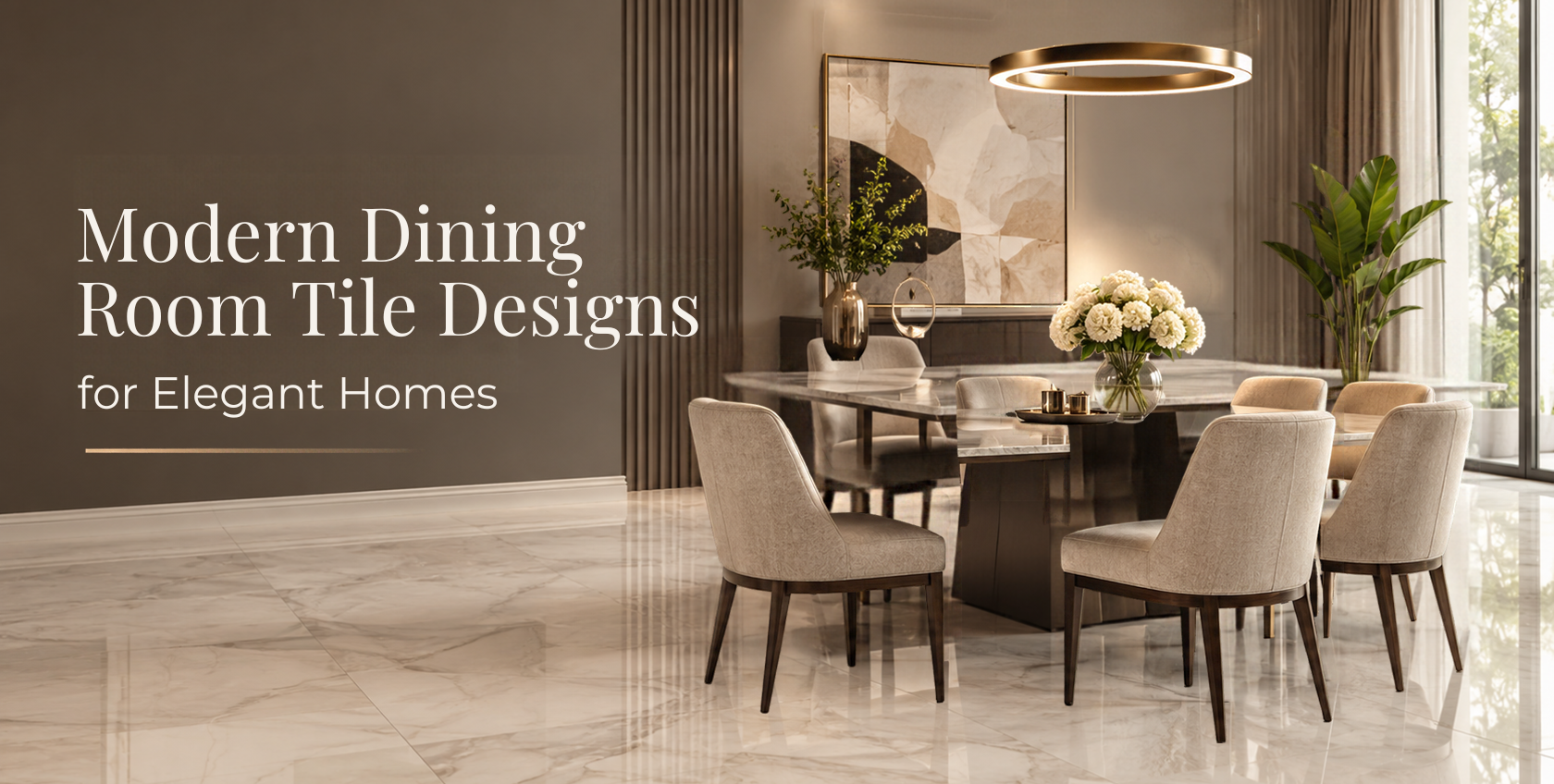
The dining room is more than just a place to enjoy meals. It is a space where families come together, guests are entertained and everyday moments become special memories. Whether it is a separate dining room or a dedicated dining area within a modern home, its interior design plays an important role in creating a welcoming atmosphere.
One of the most influential elements of dining room interiors is flooring. The right dining room floor tiles can enhance the overall appearance of the space, complement dining furniture, create a sense of openness and provide a durable surface for everyday use.
Modern vitrified tiles offer a wide range of design possibilities, from sophisticated marble-inspired surfaces to subtle stone textures and contemporary neutral patterns. With the right selection of tile colours, sizes and finishes, homeowners can create a dining room that reflects their personal style while meeting practical household requirements.
In this guide, we explore different dining room tile designs, colour combinations, flooring ideas and important factors to consider when choosing tiles for an elegant home.
1. Marble-Look Tiles for a Luxurious Dining Room
Marble-look tiles are an excellent choice for homeowners who want to create a premium and sophisticated dining environment. Inspired by the natural beauty of marble, these tiles feature elegant veins, subtle patterns and refined surface finishes.
White marble-look tiles with grey veins can make a dining room feel brighter and more spacious. Beige and cream marble-inspired designs introduce warmth, while darker marble patterns create a dramatic and luxurious appearance.
These designs work particularly well with:
- Modern dining tables with metallic or wooden finishes.
- Upholstered dining chairs in neutral colours.
- Decorative pendant lighting and chandeliers.
- Minimalist wall decorations and elegant furniture.
Large-format marble-look vitrified tiles can also create a more continuous flooring appearance with fewer visible grout lines, making them suitable for contemporary dining interiors.
2. Choose Neutral-Coloured Tiles for Timeless Interiors
Neutral colours remain popular in modern home interiors because they are versatile and easy to coordinate with different furniture styles.
Beige, cream, ivory, light grey and soft white dining room tiles can create a calm and welcoming environment. These shades work well in both compact dining rooms and spacious residential interiors.
Some attractive combinations include:
- Beige floor tiles with dark wooden dining furniture.
- Light grey tiles with white and silver interiors.
- Cream tiles with warm brown furniture.
- Ivory tiles with contemporary minimalist decorations.
- Soft grey flooring with black dining chairs and metallic accents.
Neutral-coloured vitrified tiles also provide flexibility when homeowners decide to update their dining furniture, wall colours or decorative accessories in the future.
3. Stone-Look Tiles for Natural and Contemporary Dining Spaces
Stone-look tiles bring the visual appeal of natural materials into modern dining room interiors. Their textures and patterns can create an organic appearance while maintaining the practical advantages of vitrified tile flooring.
Depending on the design, stone-inspired tiles can complement rustic, contemporary, industrial and minimalist interiors.
Popular stone-inspired looks include:
- Travertine-inspired designs for warm and elegant interiors.
- Slate-inspired patterns for contemporary spaces.
- Sandstone-inspired surfaces for earthy interiors.
- Concrete-look tiles for industrial-style dining rooms.
- Natural stone patterns for sophisticated residential flooring.
Stone-look dining room floor tiles pair beautifully with wooden furniture, indoor plants, natural fabrics and warm lighting.
4. Glossy Tiles for Bright and Elegant Dining Rooms
Glossy tiles feature a reflective surface that can enhance the brightness of an interior. They are particularly suitable for dining rooms where homeowners want a polished and sophisticated appearance.
Their reflective quality can help distribute available light throughout the room, making smaller dining spaces feel brighter.
Glossy dining room tiles can be paired with:
- Modern glass-top dining tables.
- Polished wooden furniture.
- Contemporary chandeliers.
- Light-coloured walls.
- Metallic decorative elements.
For dining room flooring, consider the room’s lighting conditions and everyday use. Check the manufacturer’s slip-resistance specifications before selecting any polished surface, particularly where food or liquid spills may occur.
5. Matte Finish Tiles for Subtle and Modern Interiors
For homeowners who prefer understated elegance, matte finish tiles offer an attractive flooring option.
Unlike highly reflective surfaces, matte tiles provide a softer appearance and complement contemporary interior themes. Their subtle finish allows dining furniture, lighting and decorative elements to become the main visual highlights.
Matte dining room tiles are suitable for:
- Minimalist residential interiors.
- Modern Scandinavian-inspired spaces.
- Natural and earthy colour themes.
- Contemporary wooden furniture combinations.
- Subtle stone and concrete-inspired designs.
Some textured matte surfaces may offer improved grip, depending on their tested surface characteristics. Always check product specifications to ensure the selected tile is suitable for its intended application.
6. Large-Format Tiles for Spacious Dining Room Interiors
Large-format tiles have become a popular choice for contemporary residential flooring. Their dimensions create a more continuous appearance and can make dining rooms look organised and visually spacious.
Fewer grout joints can also help achieve a cleaner overall flooring design.
Consider large-format dining room tiles when:
- Designing spacious dining areas.
- Creating a seamless appearance with adjoining rooms.
- Using marble-inspired or stone-inspired designs.
- Planning minimalist or luxury interiors.
- Coordinating flooring with large dining furniture.
Before selecting tile dimensions, consider the room layout, furniture placement, available floor area and installation requirements. Professional installation and appropriate substrate preparation are essential for achieving a consistent finish.
7. Wooden-Look Tiles for a Warm Dining Atmosphere
Wooden-look tiles combine the appearance of natural timber with the practical characteristics of vitrified or porcelain tile surfaces.
They are particularly attractive in dining rooms where homeowners want to create a warm, comfortable and inviting atmosphere.
Wood-inspired patterns can complement:
- Traditional wooden dining tables.
- Contemporary brown and beige furniture.
- Neutral wall colours.
- Rustic decorative accessories.
- Natural lighting and indoor greenery.
Unlike natural wood flooring, suitable wooden-look vitrified tiles are generally easier to maintain and are not affected by everyday moisture in the same way as untreated timber.
They offer an interesting alternative for homeowners who appreciate natural wood aesthetics but prefer tile flooring.
8. How to Match Dining Room Floor Tiles with Furniture
Selecting attractive tiles is only one part of creating an elegant dining room. Flooring should also complement the furniture, wall colours, lighting and overall interior theme.
Here are some combinations to consider:
Dark Wooden Dining Furniture: Beige, cream and light marble-look tiles can balance darker furniture and create an elegant contrast.
White Contemporary Furniture: Light grey, ivory and subtle stone-look tiles can create a clean and modern appearance.
Glass Dining Tables: Glossy or polished-looking tile designs can complement the reflective surfaces of glass furniture.
Rustic Wooden Furniture: Warm beige, earthy brown and wooden-look tiles can create a comfortable and natural atmosphere.
Black and Metallic Furniture: White marble-look and light grey tiles can provide an attractive contrast against darker furniture.
A coordinated colour palette helps create a balanced dining room without making the interior look visually crowded.
Coordinating Dining Rooms with Open Kitchen Spaces
In modern homes, dining rooms are often connected to open kitchens, creating a continuous and functional living environment. When selecting flooring for such layouts, it is important to maintain visual consistency while considering the practical requirements of each area. If you are planning a connected kitchen and dining layout, explore our detailed guide on how to choose tiles for open kitchen and dining spaces for additional ideas on tile finishes, colour combinations and flooring selection.
9. Dining Room Tile Patterns That Enhance Interior Design
Tile patterns can influence how a dining room looks and feels. Apart from selecting the right colour and finish, homeowners can explore different installation layouts to introduce visual interest.
Some popular flooring patterns include:
Straight Layout: A traditional arrangement where tiles are aligned in straight rows and columns. It works well with modern and minimalist dining rooms.
Diagonal Layout: Tiles are installed at an angle to the walls, creating a distinctive appearance that can add visual movement to the floor.
Staggered Layout: Rectangular tiles are arranged with offset joints to introduce a more dynamic flooring pattern. The offset should follow the tile manufacturer’s installation recommendations.
Bookmatched Designs: Matching decorative surfaces can create a symmetrical, statement-making appearance when the selected tile design supports bookmatching.
Mixed-Size Layouts: Different tile dimensions can be combined to create decorative patterns, provided the products are designed for compatible installation.
The pattern should complement the dining room dimensions and furniture arrangement rather than compete with other decorative elements.
10. How to Select the Right Dining Room Tiles for Everyday Use
While appearance is important, dining room flooring must also support regular household activities. Chairs are frequently moved, food and beverages may spill, and the floor requires regular cleaning.
Before finalising your selection, consider these factors:
- Durability: Select tiles suitable for residential floor applications and expected foot traffic.
- Surface performance: Check the manufacturer’s specifications for scratch resistance and slip resistance.
- Maintenance: Choose surfaces that can be cleaned easily using recommended cleaning products.
- Tile dimensions: Select sizes that complement the room’s proportions and furniture layout.
- Colour and patterns: Consider how the flooring will coordinate with furniture and wall finishes.
- Installation quality: Ensure proper surface preparation, adhesive selection and grout application.
Vitrified tiles are widely used in residential interiors because of their dense structure, generally low water absorption and variety of available designs.
11. Dining Room Tile Ideas for Different Home Styles
Every home has a different interior character. The right tile selection should complement its architectural style and overall design theme.
| Interior style | Recommended tile designs |
|---|---|
| Modern luxury | Marble-look and large-format tiles |
| Minimalist | White, cream and light grey tiles |
| Contemporary | Subtle stone-look and matte tiles |
| Traditional | Beige, brown and warm-toned designs |
| Industrial | Concrete-look and darker grey tiles |
| Natural-inspired | Wooden-look and earthy stone patterns |
Choosing tiles according to your home’s interior theme helps create a more cohesive and visually appealing dining environment.
Conclusion
A thoughtfully designed dining room brings together comfort, functionality and visual appeal. The right dining room floor tiles can transform an ordinary space into an elegant setting that complements furniture, lighting and the overall interior theme.
From luxurious marble-look designs and natural stone-inspired patterns to warm wooden-look surfaces and contemporary matte finishes, modern vitrified tiles offer numerous possibilities for residential dining spaces.
At Solizo Vitrified, homeowners, architects and interior designers can explore a variety of tile collections and surface finishes for modern residential projects. Selecting the right combination of colour, design, dimensions and surface characteristics can help create dining interiors that remain attractive and practical for everyday living.
Explore Solizo Vitrified’s tile collections to find designs that complement your vision of an elegant home.
Frequently Asked Questions
1. Which tiles are best for dining room flooring?
Vitrified tiles are a popular choice for dining room flooring because they offer durability, generally low water absorption and easy maintenance. Marble-look, stone-look, matte and glossy designs can all be considered according to the interior theme and product specifications.
2. Which colour tiles are suitable for a dining room?
Beige, cream, white, ivory and light grey are versatile choices for dining room flooring. Darker shades such as charcoal and brown can also create a sophisticated appearance when paired with suitable furniture and lighting.
3. Are glossy tiles suitable for dining room floors?
Yes, glossy tiles can be used in dining rooms to create a polished and reflective appearance. However, homeowners should consider the possibility of food and liquid spills and verify the tile’s slip-resistance specifications before installation.
4. Are large-format tiles good for dining rooms?
Yes, large-format tiles can create a spacious and seamless appearance by reducing the number of visible grout joints. They are particularly suitable for larger dining areas and contemporary residential interiors when installed correctly.
5. Are matte tiles better than glossy tiles for dining rooms?
Both finishes have their advantages. Glossy tiles offer a reflective and polished appearance, while matte tiles provide a subtle, understated look. The choice depends on the interior design, lighting conditions, maintenance preferences and tested surface characteristics.
6. How do I match dining room tiles with furniture?
Choose flooring colours that complement the dining table, chairs, wall colours and lighting. Light-coloured tiles work well with darker wooden furniture, while neutral and stone-inspired designs complement contemporary interiors.
7. How can I make a small dining room look bigger with tiles?
Light-coloured tiles, larger tile formats and consistent flooring designs can help create a more spacious visual effect. Using fewer contrasting patterns and coordinating flooring with wall colours can further improve the overall appearance.
Related Posts


Product Enquiry
This will close in 0 seconds
Dealership Enquiry
This will close in 0 seconds
Registration Form
This will close in 0 seconds
Registration Form
This will close in 0 seconds